The Recognition Collapse
Why “not being seen” is now the biggest driver of burnout, and what the 2026 data says about what’s really going wrong


The share of workers who say lack of recognition is driving their burnout nearly doubled in a single year. 17% in 2025. 32% in 2026.
It’s no longer just about workload, hours, or money.
It’s about recognition, the experience of being seen.
We’ve spent years treating burnout as a volume problem. Too many hours, too many emails, too many meetings. And those things are real enough.
But this data points to something else.
Glassdoor named “fatigue” as their word of the year for 2025. Mentions of feeling “undervalued” and “resentful” are climbing alongside burnout in their review data. And when someone flags burnout in a Glassdoor review, they’re 59% more likely to start job searching almost immediately.
The distance between burning out and walking out is tiny.
Meanwhile, DHR Global’s 2026 report shows employee engagement collapsing, from 88% to 64% in a single year. Over half of workers now say burnout is dragging their engagement down. That was a third just twelve months earlier.
Six in ten workers are now what researchers call “job hugging.” Staying in roles that are making them ill, not because they want to be there, but because they’re too frightened or it’s too difficult to go anywhere else.
Most of them aren’t telling anyone.
Only 42% of burned-out workers have told their manager. Of those who did, 42% say their manager did nothing at all.
Think about that.
You finally find the nerve to say something. And yet nothing happens.
Mattering
I was listening recently to Bruce Daisley’s Eat Sleep Work Repeat podcast, the episode with Zach Mercurio on mattering. Daisley called Mercurio’s book The Power of Mattering the most essential thing he’d read on workplace culture in years. I think he’s right.
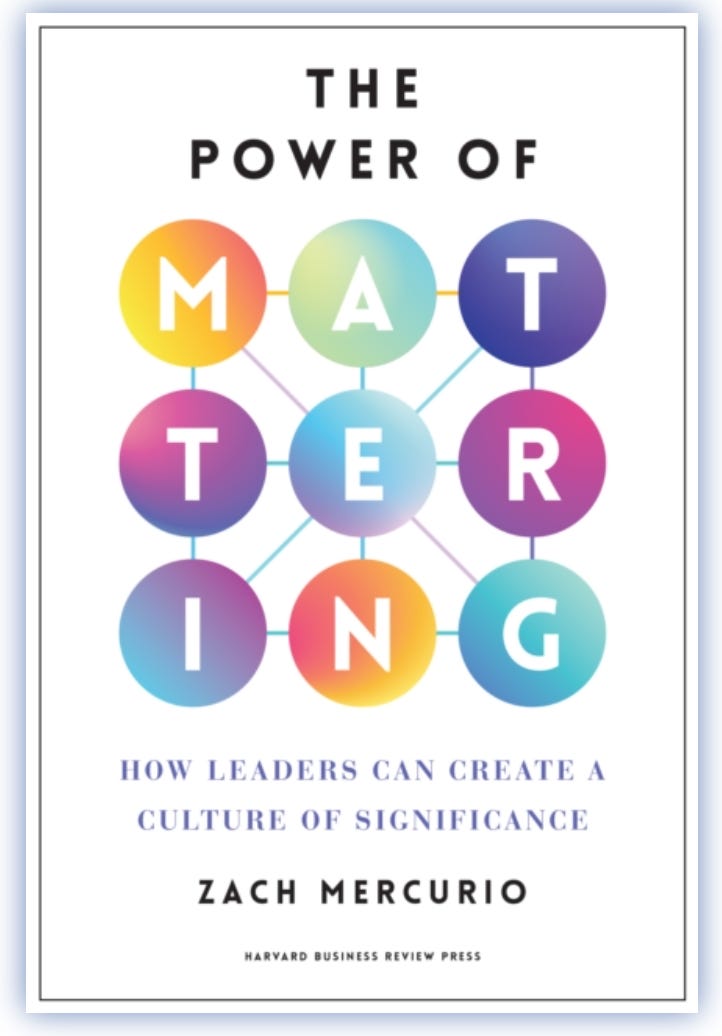
Mercurio’s argument is straightforward.
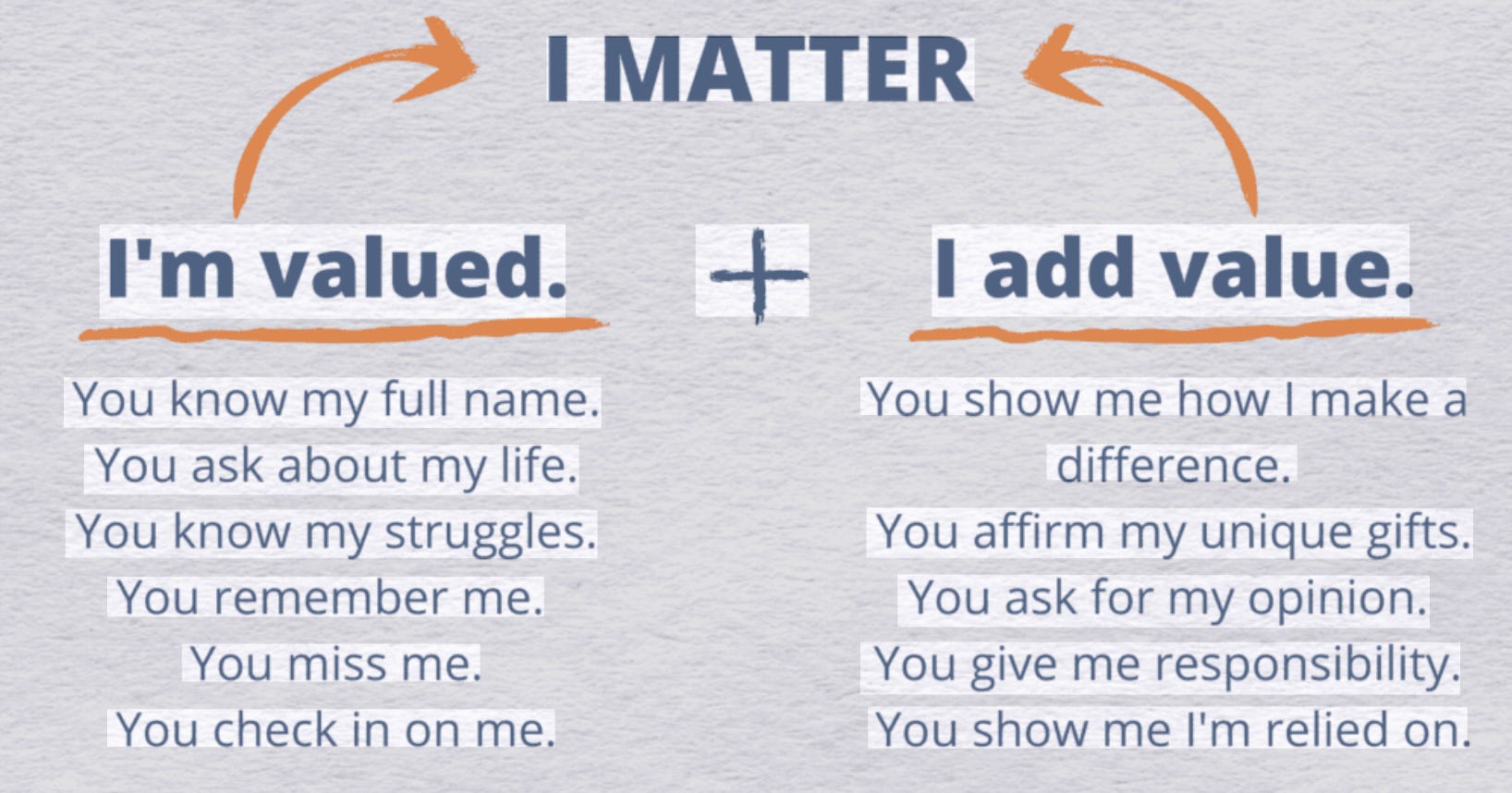
People need three things to feel like they matter: to be noticed, to be affirmed, and to be needed. Not in a vague, “you’re doing great” sort of way, but more specifically and concretely, in a way that names what’s unique about their contribution and shows them why it counts.
Mercurio describes working with 150 CEOs. One came up to him afterwards and said, and I’m paraphrasing, “I never get to think about the influence I make. I only ever think about the results I produce.”
It’s not just the frontline that’s starving for this. The need to matter goes all the way up the line to the C-suite.
Daisley made a point I thought was spot on. He said mattering is the thing that gets silently squeezed out when work intensity goes up.
When calendars are rammed, and everyone’s heads are down in back-to-back meetings, the first casualty is the human stuff. Not because anyone decides to drop it. It just evaporates. And we call it “socialisation” as if it’s optional, when actually it’s the thing that makes everything else work.
That maps exactly onto what the burnout data is showing us. People aren’t flaming out because the work is hard. They’re flaming out because the work has stopped meaning anything to them. Because nobody with any authority has looked at what they’re doing and said: That mattered, and here’s why.
Where this leads
Gallup’s data is clear. Managers account for up to 70% of the variance in team engagement and well-being. Burned-out leaders produce burned-out cultures. And right now, 4 in 10 stressed-out leaders are thinking about walking away from their roles altogether.
So we’ve got a system where the people responsible for making others feel like they matter don’t feel it themselves.
That’s not a wellbeing gap.
That’s the whole thing falling apart from the middle.
What I find useful about Mercurio’s framework is that it’s not abstract. Noticing, affirming, needing. Those are practices you can learn. You can build them into a team meeting or a one-to-one.
They don’t need a budget. They need attention and intent.
In my own work with senior leadership teams, I’ve started asking a version of this more often: When did someone last tell you, not “well done,” but specifically what your contribution made possible?
The silence that follows tells you everything.
Two questions to finish with, then.
When was the last time you told someone what their work actually changed? Not praise but impact.
And when was the last time someone did that for you?
If the answer to either is “I can’t remember,” you’re probably closer to that 32% than you think.