

GRACE Under Pressure: Your Real Test of Accountability
How the Accountability Ladder helps you notice your patterns and choose a more effective way of leading.


At a team workshop this week, the client leadership team all agreed that they had failed to keep to an agreed set of simple, non-negotiable behaviours.
Making and keeping promises was one non-negotiable behaviour consistently missed from the top of the office to the bottom across the last 12 months.
They agreed in the workshop that trusting each other was the biggest issue, and they still didn’t trust each other enough.
Fast forward to two days later, and an email exchange across the team pointed clearly to the issue of promises being made and not being honoured about clearing out a particular office space to expand usage of the building to accommodate a new team.
Accountability was nowhere to be seen.
People’s mindsets, emotional states and leadership practices were on full display
One department was willing to help resolve the matter, but only to the extent of clearing out their own files and boxes from the space.
The department looking to move into the space took a parochial view, stating, “It may not affect your teams, but it does affect mine.”
The Finance team was the only team to offer help to the project manager responsible for upgrading the office space, resolving the issue of a messy, cluttered space littered with boxes, files, and other detritus.
Elevating Leadership Practices
The Accountability Ladder is a model that describes how we respond to challenges.
Your position on the ladder in that moment usually reflects your mindset, emotional state, and leadership maturity.
The Accountability Ladder, the Leadership Circle and the GRACE Framework® fit together almost perfectly because they describe the same inner movement: how to make the shift from reactive, self-protective patterns to creative, self-authoring leadership.
Each lower rung of the ladder mirrors a Reactive tendency (Complying, Protecting, and Controlling). In contrast, each upper rung aligns with the Creative competencies of Self-Awareness, Integrity, Relating, Systems Thinking, and Achieving.
Each lower rung of the ladder reflects a Reactive behaviour pattern (e.g. blaming, justifying, avoiding, or hoping). In contrast, each upper rung aligns with Creative leadership behaviours such as acknowledging reality, owning your part, generating solutions, and taking purposeful action.
Together, they create a precise roadmap that explains why leaders drop into reactivity and how they can climb into Creative, grounded, high-trust leadership.
Together, they offer a clear map of why leaders get stuck and an equally clear pathway for how to rise into grounded, courageous, high-trust leadership.
The 8 Rungs of the Accountability Ladder
Each rung of the ladder represents a progression from lower-level behaviours that leave an issue or problem unresolved to higher levels of behaviour that take increasing levels of ownership and accountability to resolve the problem.
I’m unaware
I blame others
I make excuses
I wait and hope
I acknowledge reality
I own my role
I find solutions
I take action
Using Leadership Circle terminology, rungs 1 - 4 on the ladder can be viewed as Reactive Styles of behaviour.
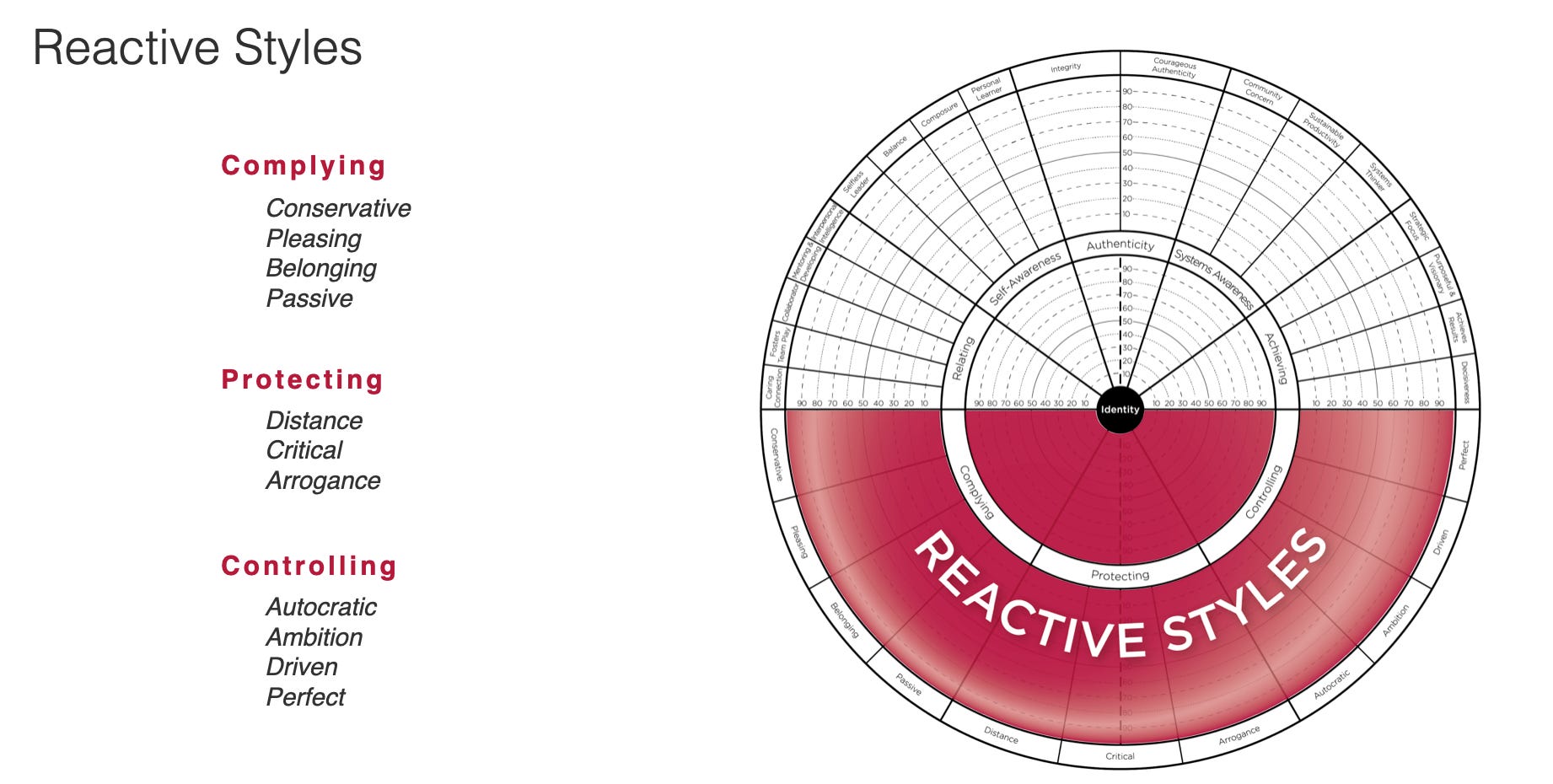
Similarly, rungs 5 - 8 on the ladder can be viewed as Creative Competencies.

If we imagine the Leadership Circle model as a clock face, we can draw an imaginary line running from the place where ‘9’ sits on the clock face to the ‘3’ of the clock face.
Below-the-line behaviours are stress responses, not character flaws. They are our default, learned responses that have served us well in helping us reach our current career stage. We tend to use them unconsciously, and they have served us well in delivering career success to date.
Yet, as noted elsewhere in GRACEWorks, what got us here is not what will get us there. To imagine the same behaviours will yield a different or better result is defined as madness
Above-the-line behaviours are leadership choices rooted in clarity, responsibility, and creativity.
Above-the-line behaviours are the territory of GRACE Framework® practices, where we identify and experiment with developing specific micro-skills that underpin abstract concepts such as Courageous Authenticity or Integrity.
By doing the ‘reps’ of repeated practice and tracking our progress, we build individual and collective ‘muscle’ for that skill, becoming better and more consistent in performing it over time.
Given we know this at both a cognitive and visceral level, why don’t teams change?
Why Don’t Teams Change?
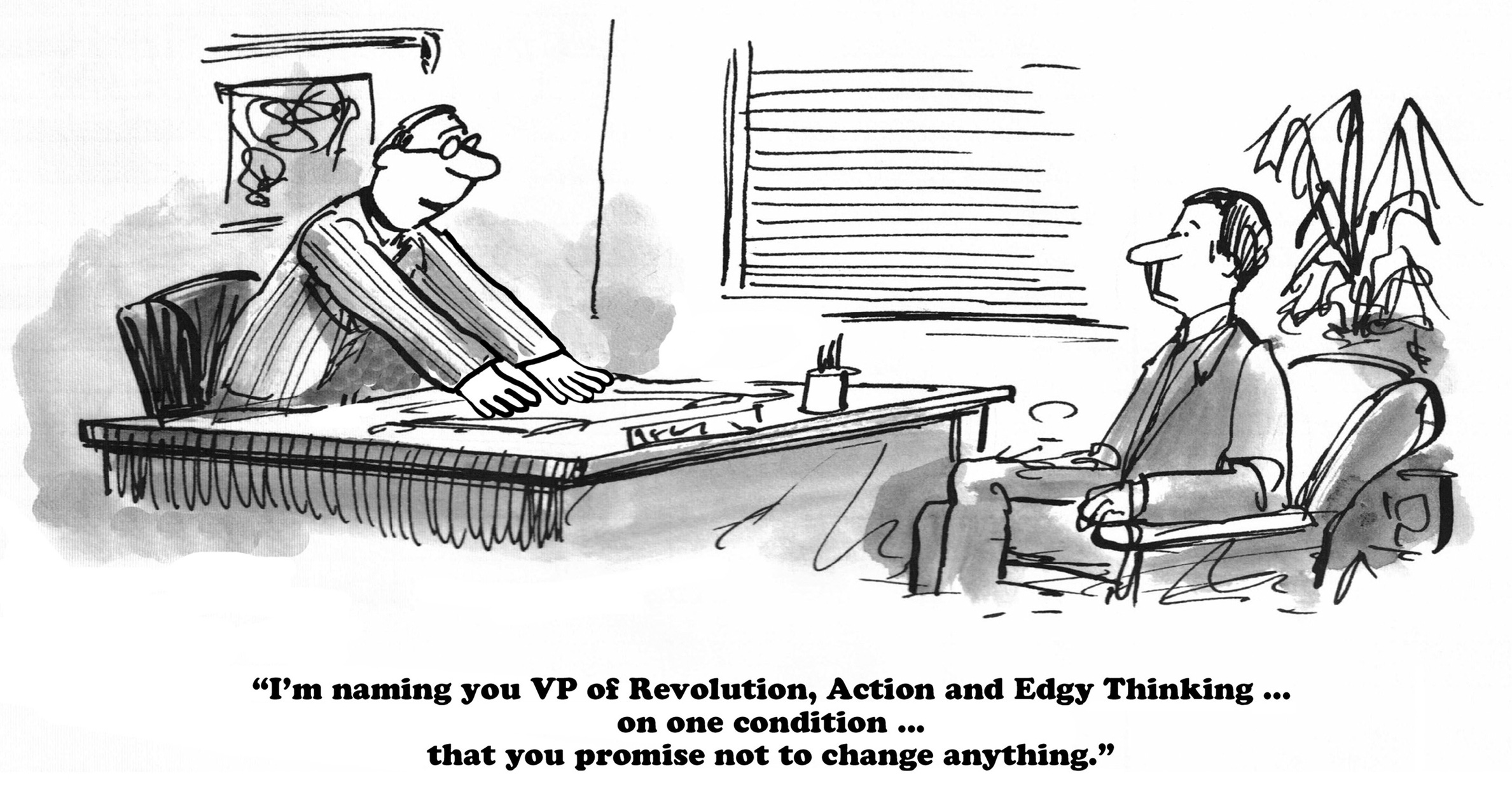
Teams often say they want change but fail to act due to resistance, fear, unclear goals, and organisational barriers.
Teams often express a desire for change but fail to follow through due to :
Psychological and Cultural Barriers
Fear of the unknown, loss of control, or status: Teams and individuals often resist change due to uncertainty, fear of failure, or perceived threats to their roles and routines
Organisational inertia: Established habits and routines create resistance, as changing them requires extra effort and can initially lead to decreased performance and increased conflict
Cultural misalignment: If the proposed change conflicts with deeply held values or the existing organisational culture, teams may resist even if they intellectually support the change
Leadership and Communication Issues
Lack of trust in leadership: Teams are less likely to embrace change if they distrust supervisors or feel unsupported by management
Poor communication and unclear vision: When the reasons for change or the benefits are not clearly communicated, or when employees feel excluded from the process, resistance increases
Insufficient involvement: Teams are more likely to resist if they are not involved in decision-making or if their concerns are not addressed
Structural and Process Barriers
Inadequate resources or support: Lack of time, training, or incentives can make change feel overwhelming or unrewarding
Change fatigue: Frequent or poorly managed changes can lead to cynicism and disengagement
Ambiguity and contradiction: When change goals are unclear or seem to conflict with other valued objectives, teams may hesitate or stall
Many members of the C-Suite would like to see change overnight, but the reality of human complexity is that overcoming these challenges is ‘a dance’ rather than a simple ‘flick of a switch’.
Climbing The Accountability Ladder Starts And Ends With Trust
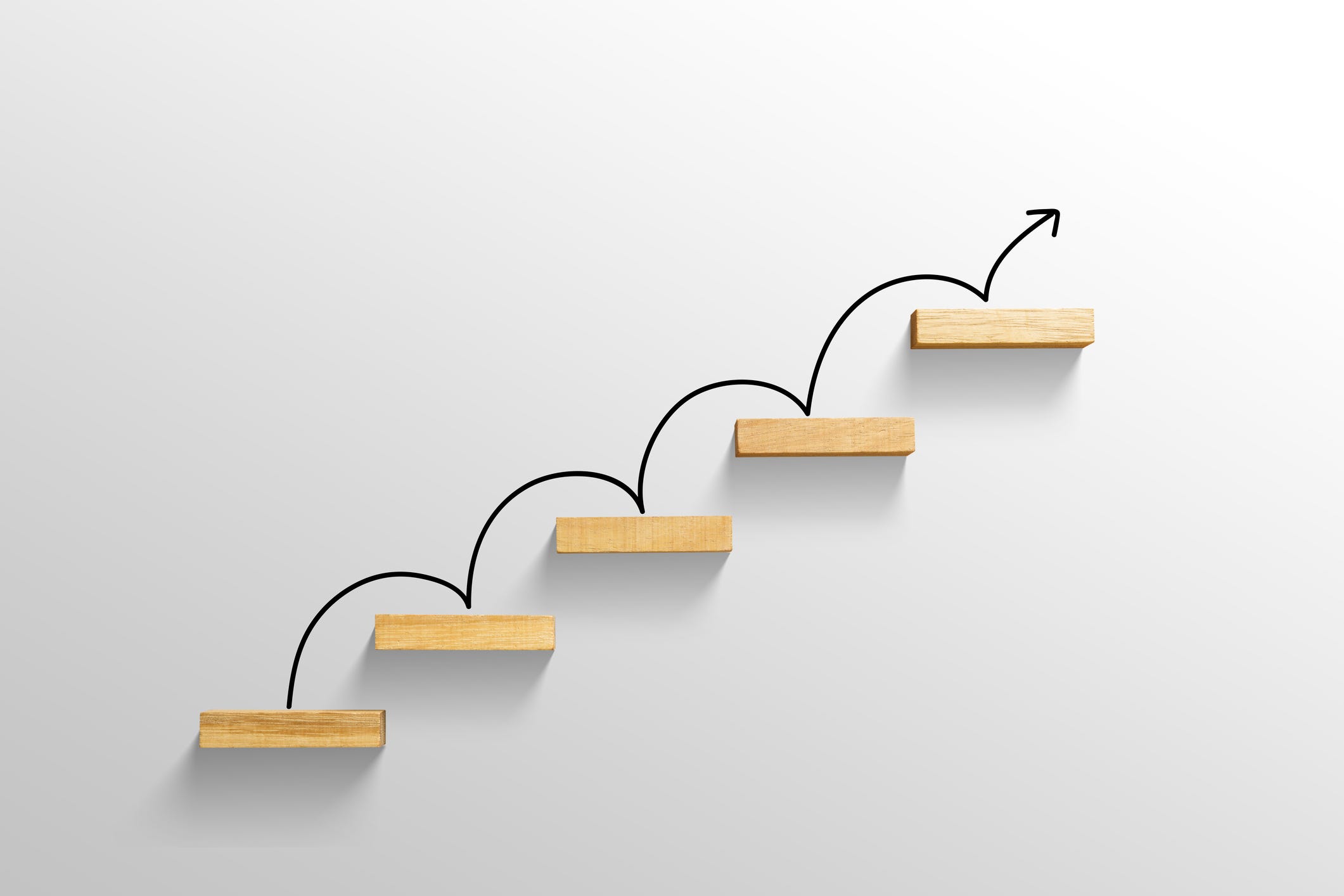
The prerequisite for greater individual and collective accountability is the need to consistently build trust and attend to ruptures in trust quickly and compassionately.
Where leaders insist on being the source of all decisions, people stop thinking and taking ownership and accountability.
I often hear C-Level leaders say, ‘I’m empowering my people and teams," when the truth is, for the most part, they’re not. They are doing precisely the opposite.
They remain the bottleneck. They hold on to control.
You cannot “empower” people while retaining control.
Trust requires allowing and encouraging people to think critically, make informed decisions, and take ownership of their actions.
When leaders control everything, their people stop thinking.
When people think, they grow.
When everyone grows, the organisation becomes unstoppable.
Trust precedes performance. Ownership precedes excellence.
Trust is the foundation that allows people to speak honestly, take responsibility, and work together without fear.
When trust is strong, teams communicate openly, challenge assumptions early, and collaborate with less friction, creating the conditions for long-term performance and learning.
Trust grows through small, predictable acts of respect, such as keeping commitments, being punctual, telling the truth gently, checking in when someone is struggling, and respecting workloads and time.
Every time these acts of respect are repeated, they send a signal to others that says, “I am reliable and I can be trusted.”
Teams build trust when members can own mistakes, apologise cleanly, and repair ruptures in trust quickly without shame or fear of attack.
People must feel equally safe asking for help as offering it. When feedback, challenge, and repair happen without judgment, teams climb the Accountability Ladder together, shifting from blame and avoidance to responsibility and problem-solving.
Trust collapses when people share stories that are not theirs to share. High-trust teams uphold the “vault”: what is shared in confidence remains confidential.
High-trust teams practise generous assumptions, checking in before assuming malice or neglect (“I know you care about me; can I check something with you?”).
These behaviours reduce conflict, prevent reactive behaviour, and support a GRACEful shift from protecting self to connecting with others.
Where Do I Start?
The first step is to be courageously honest with yourself and decide whether you genuinely want to empower your people and relinquish control.
There is no room for lip service or performance gestures, and before moving forward, a long, hard and honest look in the mirror is needed.
For many leaders, empowering others represents a tangible step in developing their leadership practices, which can often be a profoundly uncomfortable feeling that causes resistance behaviours to surface.
Your defence patterns are obvious to spot because your resistance isn’t to the idea of empowering others; your resistance is protecting you from a perceived disintegration of your current identity.
Support is needed to help navigate the tension between letting go and maintaining control, staying with the discomfort long enough in small, repeated cycles of exposure, so that you can find a new equilibrium.
Whilst it may sound like a cliché, it is an undeniable truth that leading others begins at the top and starts with leading ourselves first.
“Becoming a leader is synonymous with becoming yourself. It’s precisely that simple, and it’s also that difficult.”
~Warren Bennis, Organisational consultant and author
The good news is that over time, this culture of honesty and shared responsibility strengthens collective leadership, making the whole team more resilient and their collective leadership practices more effective.
To find out more about how you can apply the GRACE Framework® in your teams, click the button below and listen to the 🎧 GRACE Under Pressure Masterclass 🎧 to get you started on your journey 👇.
Very interesting article and very recognisable. Thanks for the insight