

Designed for GRACE?
What is Human Design and how does it help people and teams cultivate GRACE?


Introducing Tina…
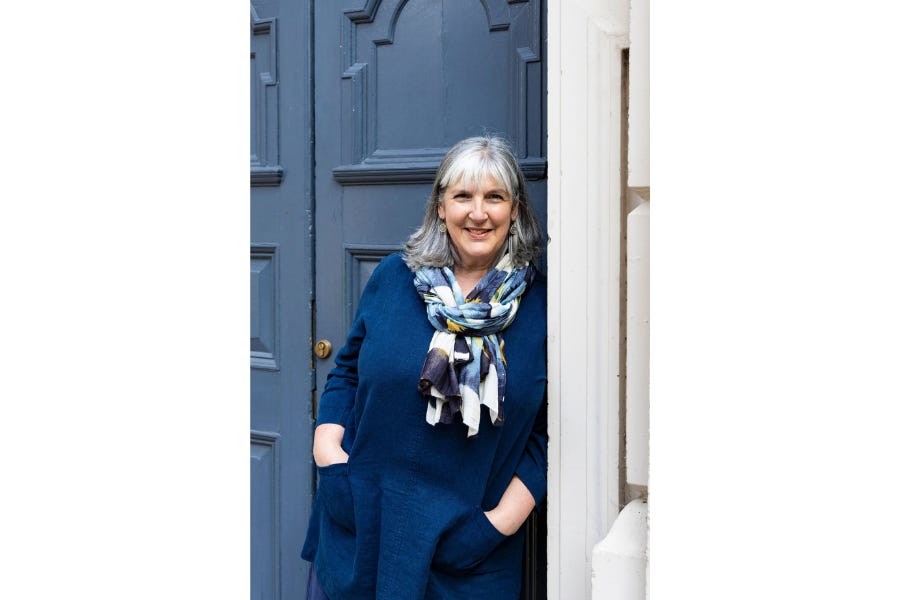
Since 2007, I’ve been lucky to learn and apply a broad range of models and tools across different contexts and at different points in each person's or team’s development journey.
From experience, it takes more than a single model or tool. The best results come from using a mix of them based on the context and the people you’re working with.
“All models are wrong, but some are useful” ~ George Box, British Statistician
This is a guest post from my wife, Tina Bettison, who, among her many talents, is a certified Human Design coach.
She is a Director at The Elevate Partnership, and regularly provides the ‘secret sauce’ of Human Design, which helps clients expand how they explore many supposedly difficult issues and topics often found in coaching partnership conversations.
I’ll invite Tina to say ‘hello’ and tell you more about it in this, the first of a series of posts about Human Design.
How this all began…
Without energy life would be extinguished instantaneously, and the cellular fabric would collapse. ~ Albert Szent-Gyorgyi, Nobel Prize Winner, 1937
When Paul and I met in 2009, a friend was studying for her Human Design certification, and studying my Design as a case study. Then she also read Paul’s chart. With hands on heart, I can say that knowing and working with our unique Human Design has helped our relationship navigate the stormy times and thrive.
We have such completely different energies, and Human Design has given us a way of understanding and communicating with each other. In all honesty, I do not think our relationship would have survived without it. Human Design has enabled us to grow together through a genuine curiosity and desire to really relate to each other. And to support each other to be our truest and most aligned selves.
I’ve now been studying Human Design in depth for several years so that I could align my own business as a writer and facilitator with my design. From those early readings, I knew that what worked for around 70% of the population was not going to be correct for me. And I would just be blowing my energy circuits if I tried to do it ‘that’ way.
From my experience, when you live and lead according to your design, life tends to feel more easeful, magnetic, and fulfilling. The more I align with my design, the simpler life becomes. Simple isn’t always easy, but it does remove a lot of unnecessary complexity.
So what is Human Design?
Human Design is a practical self-awareness system that blends ancient wisdom and modern science. Your Human Design chart reveals your energetic blueprint, including how you’re designed to work, communicate, build relationships, and contribute to the world.
At its core, Human Design is about alignment. It shows you how to stop forcing what isn’t natural for you and instead align with your authentic strengths, rhythms, and decision-making style. And there are charts for your evolving life stages, which give insight into the energetic potential for who you are becoming as you mature.
It is not a personality profiling system, even though there are aspects of your design that you might recognise in profiling systems such as Myers-Briggs, DISC, Enneagram and others. Human Design is based on your birth data, not on how you might feel on the particular day that you fill in the profile. So the origin of the data is quite different, and your charts will always be specific to your birth and life stage dates.
A brief snapshot of our designs
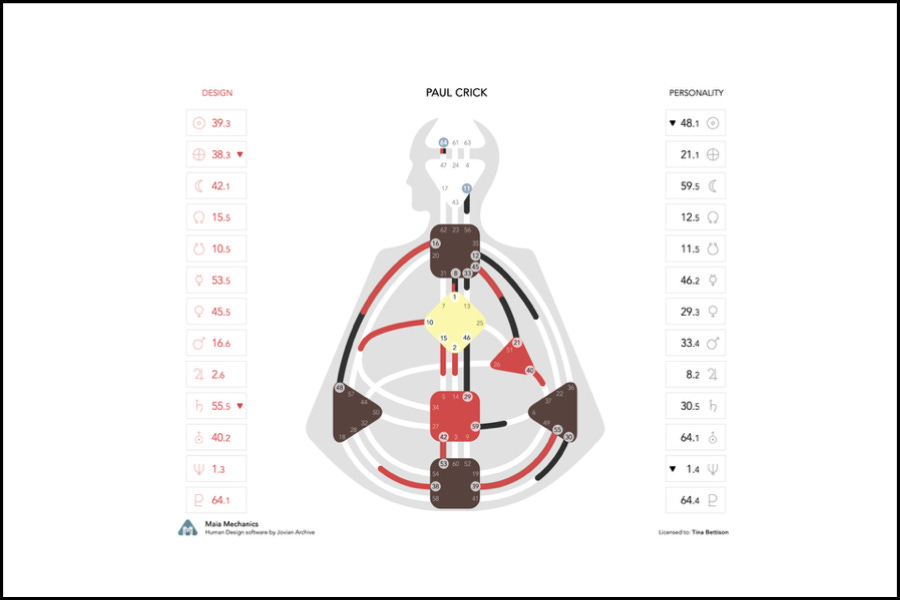
Paul is designed with a responsive, generative energy that is fast and quick-thinking. He can work at pace and pivot quickly if something isn’t working for him.
He has to be mindful of skipping steps and may have to return and repeat, but this is part of his process for finding the most efficient way for him. His challenge is to slow down and wait for clarity over time to allow his emotions to settle.
His energy is consistent and reliable - like he’s fitted with an energiser battery that just needs recharging when it runs low.
You could think of him as an iPhone. Once he’s powered up, he can just keep going until recharge time. He needs to discharge all his energy at the end of the day, so his aikido practice is ideal for doing that.
He is also designed for depth of knowledge, investigation, experimentation, and learning through trial and error.
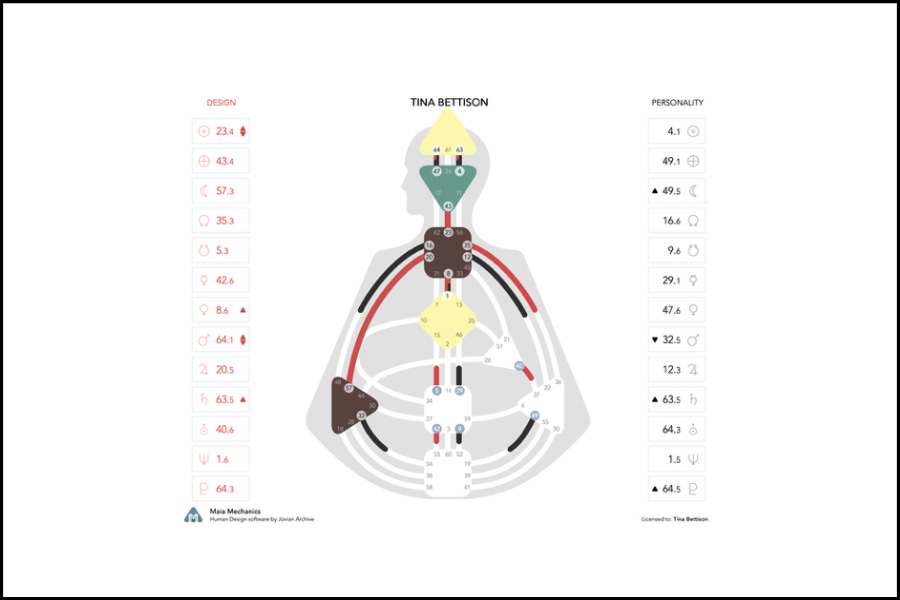
My design doesn’t have a battery. Mine is more like a reading lamp. When plugged in and switched on, I can shine my light very specifically. But I can’t stay on forever or I burn out. I am not built for consistent productivity. I work in short, often intense bursts and need frequent timeouts or rests or a change in activity. I cannot keep pace with Paul, and I am not designed to. Sometimes I feel like a leaf caught in his whirlwind.
I am designed to guide the energy of others when I’m invited. For me to work well with someone, they need to recognise what I bring to the party AND be ready to receive it.
Their readiness is absolutely crucial, otherwise my guidance won’t land. Often, I can ‘see’ exactly where a problem lies, but I have to keep my opinion or advice to myself until it is asked for, which can be a challenge, and I don’t always get that right.
Where Paul has to wait for clarity over time, I can trust my instinctive clarity in the moment. I am designed for investigation and depth, too, but where Paul is designed to experiment with his knowledge and experience, I am designed to share what I know by connecting with others.
Paul’s energy aura is magnetic to the collective; mine is penetrating to the individual.
This is just a tiny glimpse into what our charts can show us, but it gives you an inkling into how different people’s energies are designed to be.
How does Human Design align with the GRACE Framework?
The GRACE Framework® addresses three fundamental issues for high-achieving professionals who are running on empty, stressed, overstretched, and stuck in performative environments. These issues are often expressed as follows:
I feel mentally, emotionally, and physically exhausted, but stepping back feels like risking everything I’ve worked so hard to build.
I’m no longer doing a good enough job of controlling my thoughts and behaviour, and I’m not showing up with the composure and clarity my role demands.
The culture is grinding me down, but I can’t unplug from it long enough to recover.
Each of these issues can be viewed through the lens of Human Design:
Mental, emotional and physical exhaustion all arise from misalignment. When you operate from how you have been conditioned to be or behave rather than from how you are designed to be, it leads to depletion.
Trying to live through an energy style that is not yours will eventually lead to burnout. You don’t have to risk everything you’ve built so far. See that as a foundation that supports you as you learn what is energetically working for you and what’s not; what you can carry forward as wisdom learned, and what needs to change in order for you to align with what really works for you.
Every element of your Human Design chart falls along a spectrum, from a shadow or low-energy state to a wisdom or high-energy state.
If you are struggling to control thoughts and behaviours, it is likely that you are getting stuck in the lower energy states, which will also lead to mental and emotional exhaustion and ultimately burnout.
Knowing the shadow states most specific to your design and how to shift your energetic state to a higher level can make a huge difference in your ability to regain your composure and clarity.
Through your design, you can see clearly whether the culture that is sucking the life out of you is one you need to leave, or one where you can lead the necessary cultural evolution.
Understanding your Human Design within the GRACE Framework can help you restore your calm, centred leadership with clear boundaries and confident decision-making, so you can lead and deliver with ease even when things are demanding.
The pillars of GRACE (Grounding, Resolve, Acceptance, Create, Embody)
There are distinct elements of your Human Design chart that can be examined through the GRACE Framework®'s main pillars.
Specific aspects of your chart show where your core Grounding lies, what supports your Resolve, and how you are designed for your innate Creativity. Acceptance and Embodiment are in living your whole design.
It’s pretty clear that when we know and are aligned with our own design, then acceptance of self becomes much easier.
When we know what we are NOT designed for, it can be a huge relief to let go of what is not meant for us, and we can stop berating ourselves for all that we think we ‘should’ and struggle to be.
Acceptance of others becomes easier, too. When we understand how our energy differs from the energies of those we love or work with, we can be more accepting of them and of why they don’t do things the way we think they should - or the way we would do it!
If you consider that from a team perspective, wouldn’t it be useful to know who has fast-paced energy, who is designed for steady-paced energy, who is there to guide the energy, who is there to create momentum and who is there to witness and reflect back?
How powerful would it be for you to know exactly where your energy is best utilised within the team?
Trying to make those who are not designed to work at speed work consistently at a fast pace is a recipe for disaster and dis-ease. It doesn’t take much imagination to see how that is playing out in organisations.
Human Design is called the science of differentiation for good reason. Acceptance that we are all designed differently, and we are meant to use our unique energy to the highest good of self and the collective, is a core element of the Acceptance pillar of GRACE.
The Human Design chart is also known as the ‘body graph’, and in a future guest post, I’ll show you how that works and how embodying your design reflects the Embody pillar of GRACE.
So I’m wondering… are you curious about your natural energy, and whether it is being correctly utilised in your work and your relationships?
Future guest posts will explore specific examples of how knowing someone’s Human Design is applied in coaching partnership conversations.
For me, Human Design offers the only way I know of right now to tailor these conversations to each person's unique energy profile.
When you know your Human Design, you can :
Sustain success without self-abandonment. Human Design shows you how you are actually built to make decisions, influence others, and manage energy — so you stop leading from urgency and over-functioning, and start leading from alignment, clarity, and grounded authority. The result is sustained performance without nervous-system burnout.
Increase influence without increasing effort. By understanding your energetic blueprint — how you initiate, respond, communicate, and impact others — you create warmer, more authentic client and team relationships, achieve faster agreement and alignment, and win business through resonance rather than force.
Master pressure without losing yourself. Instead of suppressing emotion or doubling down on control, you learn where you absorb stress, where you overcompensate, and how to regulate in real time. This cultivates clearer thinking, better timing, stronger boundaries, and a way of working that delivers results while protecting your wellbeing.

If you are curious, Tina has a short container, the Moving Mountains Orientation, where she will look through the lens of your Human Design to hone in on your energetic style and how you can use it as a fast, clean path to address what might lie at the heart of your exhaustion.
Feeling a ‘hell yes’ to that? 💬 Book an initial conversation with Tina here. 💬
You can also follow Tina’s writing on her Substack ‘Gathering Our Bones’

 | A guest post by
|
Very interesting. ! Tina, thank you for sharing. Curious, if this is based on birthday date does it involve astrology?
Tina! This is fascinating. I love the field of Quantum Physics As we know, everything is energy. I would to learn more and take or learn or become certified in the Human Design model. Please advise on how to become educated.